
🔺By Sotirios M. Tzoumas
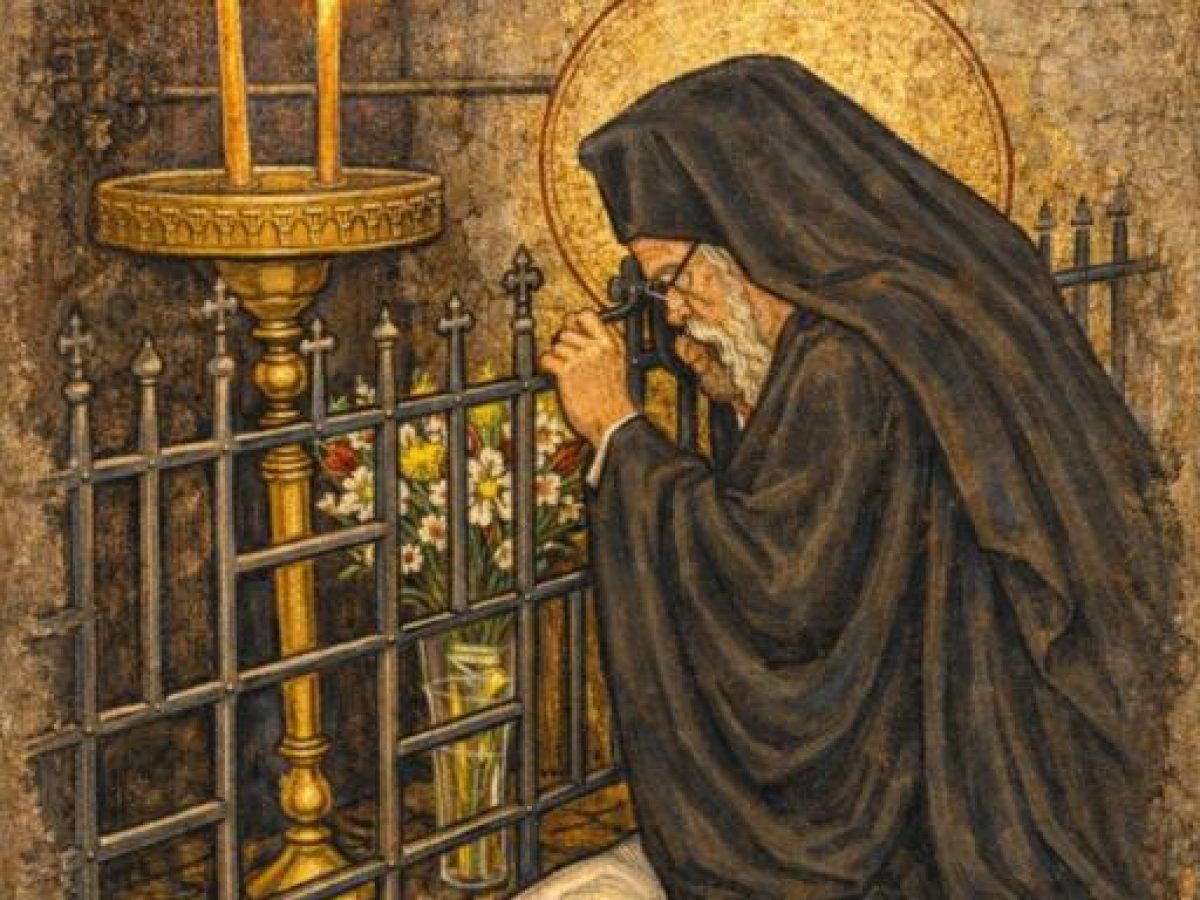
Silent, yet eloquent, the gesture of Ecumenical Patriarch Bartholomew before the closed Gate of the Patriarchate becomes each year an act of profound remembrance and, at the same time, a testimony of faith. Where history was once sealed in blood, today a small candle is lit—a flame humble yet unceasing, resisting the darkness of time and oblivion.
A silence that cries out. A small flame that illuminates centuries.
Patriarch Bartholomew stands kneeling before the closed Gate of the Patriarchate—where another Patriarch, Gregory V, sealed with his martyrdom the faith of an entire people, an entire nation. And within this silence, he speaks more powerfully than any words.
For this prayer is not merely remembrance. It is resistance. It is continuity. It is witness.
The Patriarch’s kneeling is not simply a ritual act; it is a silent dialogue with the past, a reminder of the sacrifice of Gregory V and of all those who remained faithful to the end. At that very spot, history does not belong only to the past—it pierces the present and illuminates the future.
The candle he lights becomes a symbol of hope, prayer, and responsibility. The flowers he lays are a silent offering of honor and love. And his prayer, simple yet profound, embraces not only the Great Church of Christ, but all of humanity in its trials. It is a prayer for every suffering fellow human being—a cry without sound, yet bearing a genuine message: let the wars cease, let the sacrifice of the innocent end.
The Patriarch, “free yet besieged” within the narrow confines of history and delicate balances, does not raise his voice against the powerful of this world. He does not confront authorities or thrones. He does not compete in strength with the rhetoric of the mighty. And yet—his silence weighs more than any proclamation.
Where others speak, he prays.
Where others impose, he endures.
Where others raise their voices, he kindles light with his humble candle.
And this light, humble and steadfast, carries the memory of a “subjugated” yet unconquered Church—a Church that learned to endure not through power, but through sacrifice; not through imposition, but through patience; not through noise, but through truth.
His candle becomes a cry for peace.
His kneeling becomes a supplication for the world.
His presence becomes a message to all: stop.
Stop the war.
Stop the hatred.
Stop the forgetting.
In a troubled world, this image reminds us that faith does not shout—it illumines. And that memory does not weigh us down—it guides us.
And perhaps, in the end, this is the most powerful voice of all—the voice that is not heard, yet shakes the soul.