
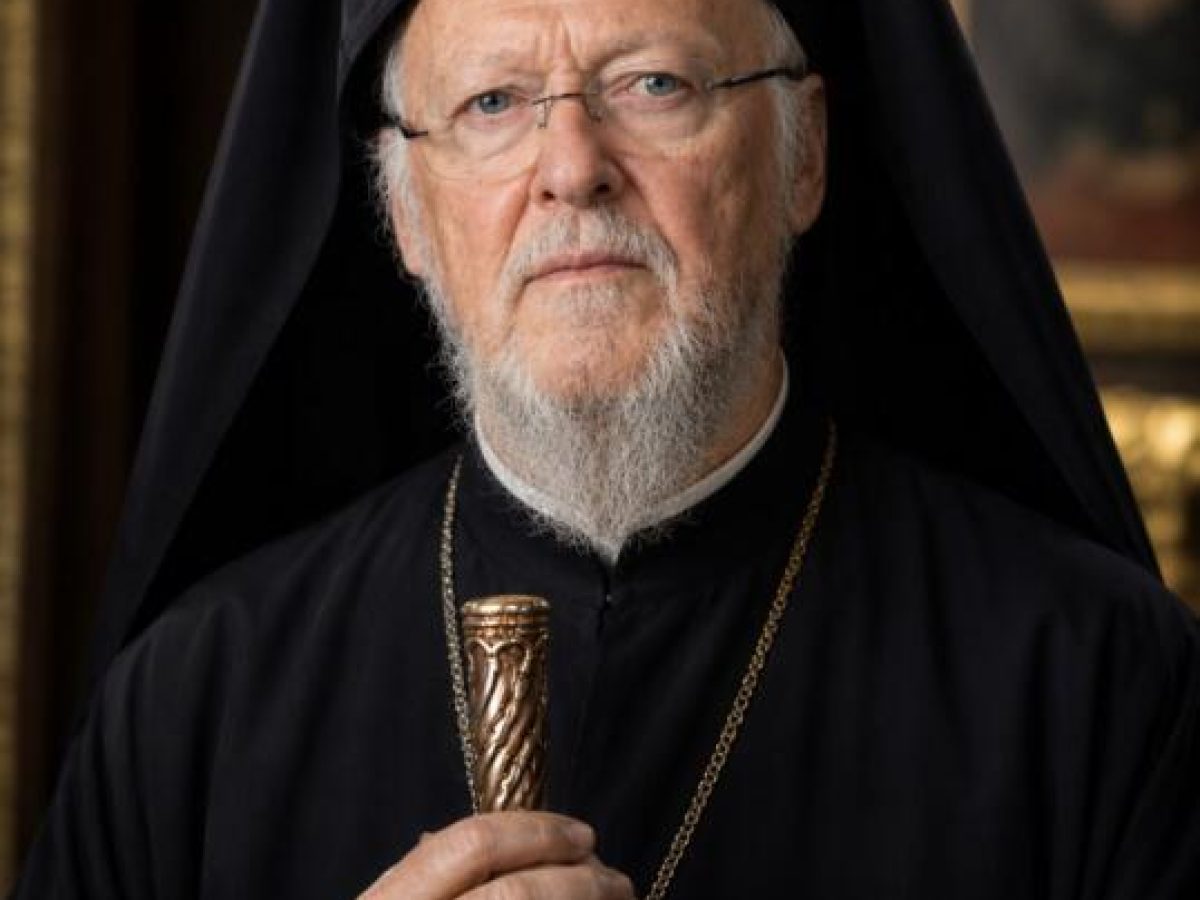
Love for the Ecumenical Patriarchate cannot be identified with silence. Respect for the institution does not mean unchecked tolerance. And ecclesiastical courtesy does not require us to overlook what wounds the faithful of the Church.
Today, after so many years of patriarchal ministry — you are the longest-serving Ecumenical Patriarch since the establishment of the institution — the issue is neither unjust deconstruction nor servile idealization. The issue is truth. And truth, when it concerns the Church, must be spoken with respect, but also with boldness. Once, you considered this healthy. Yet over the years, and amid flattery, you changed your stance and position.
The Ecumenical Patriarchate is not anyone’s personal possession. It is an institution of witness, cruciform responsibility, and synodal tradition. And you know this better than anyone. Therefore, when the impression is created that the Synod of the Throne is reduced to the formal ratification of prearranged decisions, then it is not merely an administrative procedure that is wounded; it is the very ecclesiological conscience of Orthodoxy itself that is injured.
The Orthodox Church is not governed by personal preferences, by fear, by the removal of hierarchs without convincing justification or accountability, nor by relationships of dependence. It is governed synodically, transparently, and pastorally. I wonder, as a simple believer, how your patriarchal shoulders can bear the burden of the unjust beheadings of so many hierarchs — Evangelos of New Jersey and Sardis, Athenagoras of Mexico, and Eireneos of Lampi — not because they erred somewhere, but because they stood in the way of the plans of factional leaders who, in view of the next day, wish to gain the upper hand. The first two were already at the stage of retirement. Evangelos, however, was in the prime of his creative years and had demonstrated until then how devoted a friend of the Phanar he was, personally bound to you in a moral and almost inevitable way. And you, instead of manna, offered gall. And betrayal. And now? He remains unused, because one of your factional leaders does not wish him to be utilized. And you, sadly, listen to him! Perhaps because, in our days, the sound of money is stronger than the sound of the church bell.
The Patriarch, Your All-Holiness, must both be and signify love. For he is not called to lord it over his brethren, nor to encourage the creation of groups and factions, but to preside in love, to reconcile, to heal, to unite. Nor is it the task of the Patriarch and his courtiers to silence the voices that criticize them. On the contrary, they ought to encourage them.
Particularly grave is the responsibility for the pan-Orthodox situation. Orthodoxy today presents an image of fragmentation, mistrust, and mutual undermining. Even where real problems existed, the manner of addressing them ought to have been healing, not confrontational. Primacy in Orthodoxy is not a right of domination; it is a ministry of unity. No one rejoices in the present condition except our enemies.
Equally serious is the issue of the Diaspora, especially the Archdiocese of America and the Archdiocese of Australia. When the two largest provinces of the Throne — its flagships — continually live amid internal crises, administrative upheavals, disappointment among the faithful, and declining trust, it is not enough merely to shift responsibility elsewhere. What is needed is a courageous reexamination of persons, structures, methods, and mentalities. One mistake is not corrected by another mistake, but by courageous and decisive decisions.
The Patriarchate must also provide convincing answers on matters of transparency. Wherever there are donations, state subsidies, contributions from the faithful abroad, and large sums of money, there must be clear accounting. The Church does not fear the light. On the contrary, when it avoids scrutiny, it generates shadows, suspicion, and scandal.
Your All-Holiness, projection, ceremonies, public relations, and constant travels are no longer enough. Legacy is not built through photographs, but through works of reconciliation. It is not preserved by communication strategies, but by humility, self-criticism, transparency, and the restoration of synodality.
History will judge. But before history, the conscience of the faithful people judges. And before and above the people, God judges.
For this reason, this is not a time for stubbornness or silent defensiveness. It is a time for responsibility. “And there was silence in heaven for about half an hour.” The half hour God gives us to become conscious of our responsibilities. A time for the books to be opened, for voices to be heard, for synodal order to be restored, for wounds to be healed, for ecclesiastical administration to cease resembling a closed mechanism of persons and expediencies. When the historian of the future is called to assess your Patriarchate, among the many great things he will acknowledge, he will also find that this “closed mechanism of persons and expediencies” will be your greatest blemish.
The Phanar needs authority, not fear. Unity, not factions. Ministry, not authoritarianism. Spiritual gravity, not perpetual public visibility.
If your Patriarchate wishes to remain — and it will remain — in the memory of the Church as a period of offering and not as a period of divisions, then one act of courage is now required: accountability, restoration, reconciliation, and a genuine return to the synodal ethos of Orthodoxy.
For the Throne of Constantinople is not preserved by mechanisms. It is preserved by truth. And truth, however painful, is always the only path to salvation.
With respect,