
By Sotirios M. Tzoumas
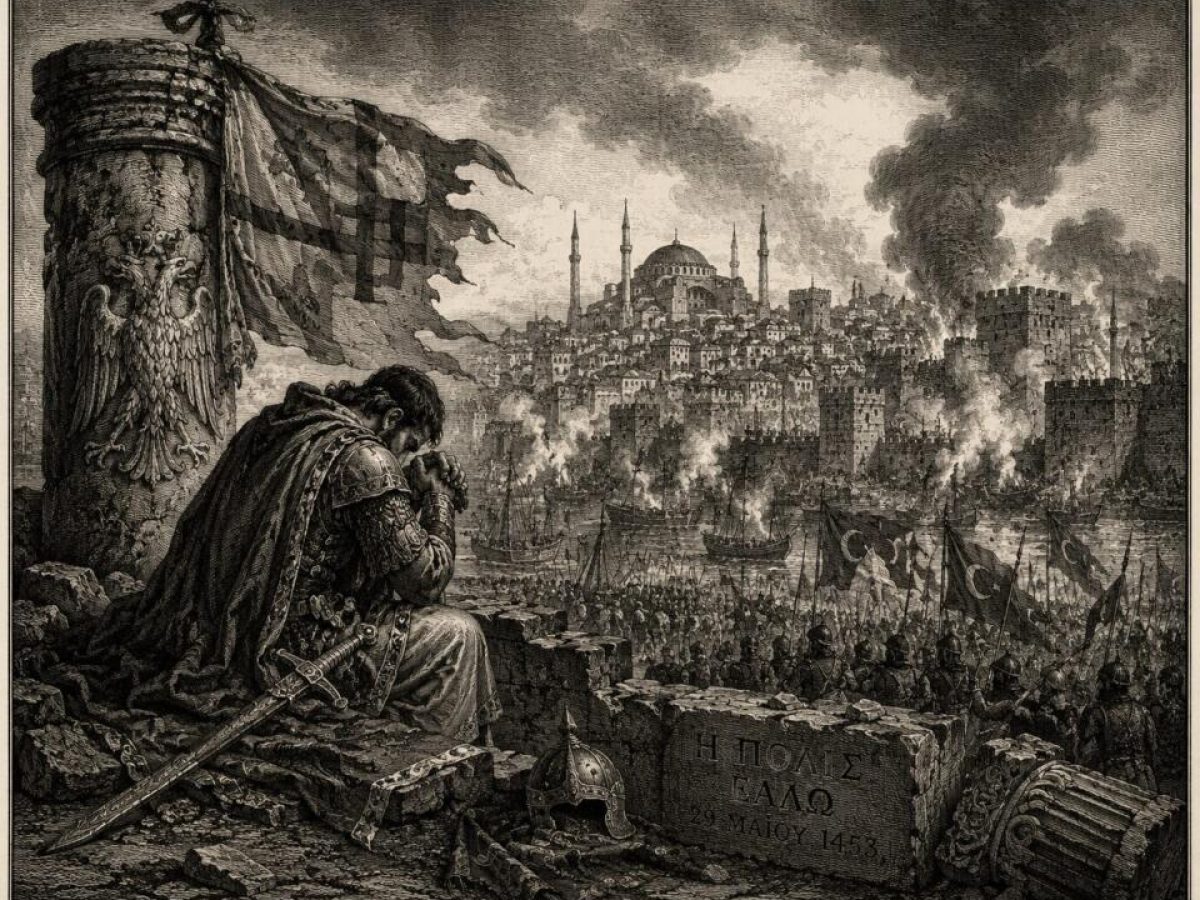
May 29, 1453 is not merely a date in the history of Hellenism. It is a wound that remains alive in our collective memory. The Fall of Constantinople to the Ottoman Turks marked the end of the Byzantine Empire, the thousand-year-old Roman Empire of the East, which stood as a beacon of faith, culture, and the Greek spirit.
Yet history is not written solely by external enemies. More often, the greatest disasters begin with the cracks that emerge within nations themselves. The Fall of the City is perhaps the most tragic example of this truth.
The Age-Old Division
Many historians agree that Constantinople did not fall solely because of the cannons of Mehmed the Conqueror. Its decline had begun much earlier, when the Greeks ceased to be united.
Civil strife, political intrigue, personal ambitions, and struggles for power weakened the state more than any foreign army. While the enemy stood outside the walls, suspicion, rivalry, and factionalism prevailed within the empire.
The same tragic pattern has repeatedly appeared throughout Greek history. From the city-states of antiquity to the civil conflicts of modern Greece, division has been the deepest wound of our nation. We often triumphed over our enemies when we stood united, and we often suffered defeat when we fought among ourselves.
The Passions That Harm Us
The history of the Fall calls upon us to look not only at our enemies but also at ourselves.
Arrogance, lust for power, envy, pettiness, and selfishness are vices that erode the foundations of every society. When personal interest is placed above the common good, decline becomes inevitable.
Our ancestors paid a heavy price for these mistakes. History teaches us that no people are endangered more by anything than by their own flaws.
The Responsibility of the Younger Generations
Young Greeks bear no responsibility for the mistakes of the past. They do, however, bear the responsibility to learn from them.
The memory of the Fall should not nourish hatred nor imprison our people in sorrow. Instead, it should serve as a beacon of self-awareness. It should remind us that unity is strength and that division leads to weakness.
The younger generation is called upon to build bridges where previous generations erected walls. It must rise above pettiness, ideological extremism, and personal rivalries. It must love the homeland not merely with words, but through actions—through education, integrity, diligence, and faith in the values that have kept Hellenism alive throughout the centuries.
The Message of the City
Constantinople is not only a symbol of a lost empire. It is also a symbol of a timeless warning.
Its walls were not brought down in a single day. First came the collapse of the defenses of the soul, the unity of the people, and the awareness of a common mission. Once these were lost, the fall became only a matter of time.
Today, more than five hundred years later, the greatest tribute to the Fall is neither words nor ceremonies. It is the decision not to repeat the same mistakes—to overcome division, heal our passions, and remember that a people who forget the lessons of their history risk reliving its tragedies.
The City fell in 1453. The question that remains alive is whether we, the descendants of those who defended it, will learn from history or continue to repeat the very errors that once opened its gates.